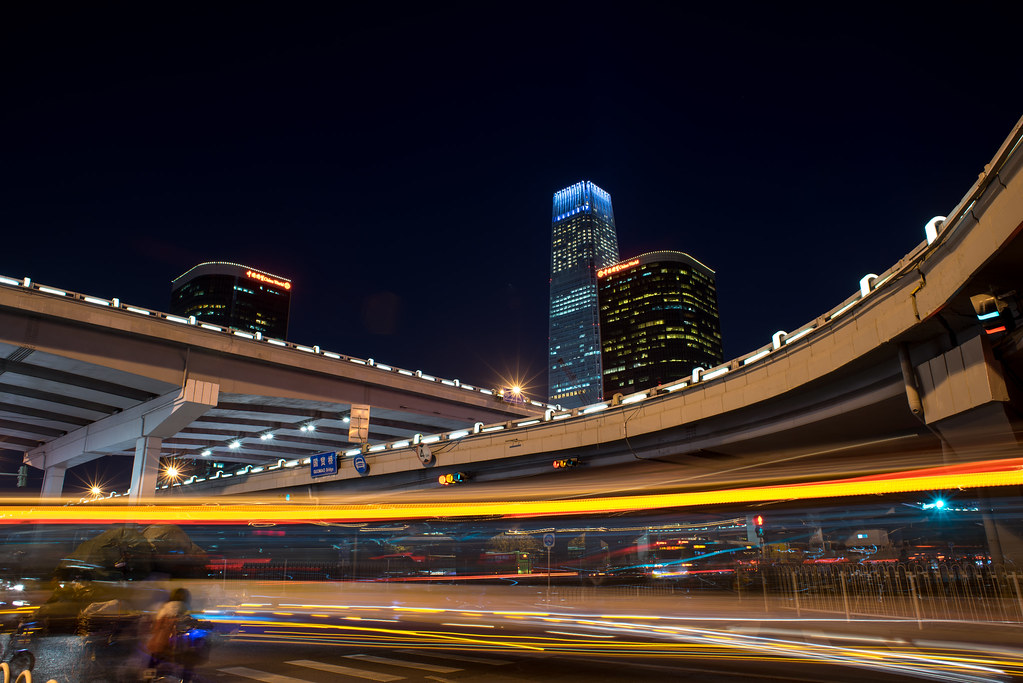
15s, f/16, ISO 50, 24mm (Sony A7r; Nikkor 24mm f/2.0)
Guomao Bridge at Night. The first (east-west) section of Guomao Bridge was opened to traffic in 1986 as Dabeiyao Bridge (大北窑桥). In the 90s, when the third ring road was built, a north-south lane was added on top. Located in Beijing's central business district, it's one of the city's busiest intersections today.
Before it was named Guomao in the early 1990s, the neighborhood was known as Dabeiyao (大北窑), which means something like "large northern furnace". The name is a reference to the fact that the Japanese used the area as a brick kiln during World War II. Continue below the fold for a picture of Guomao from the mid-1980s.
Showing posts with label China. Show all posts
Showing posts with label China. Show all posts
Under Guomao Bridge


Beijing Behaving
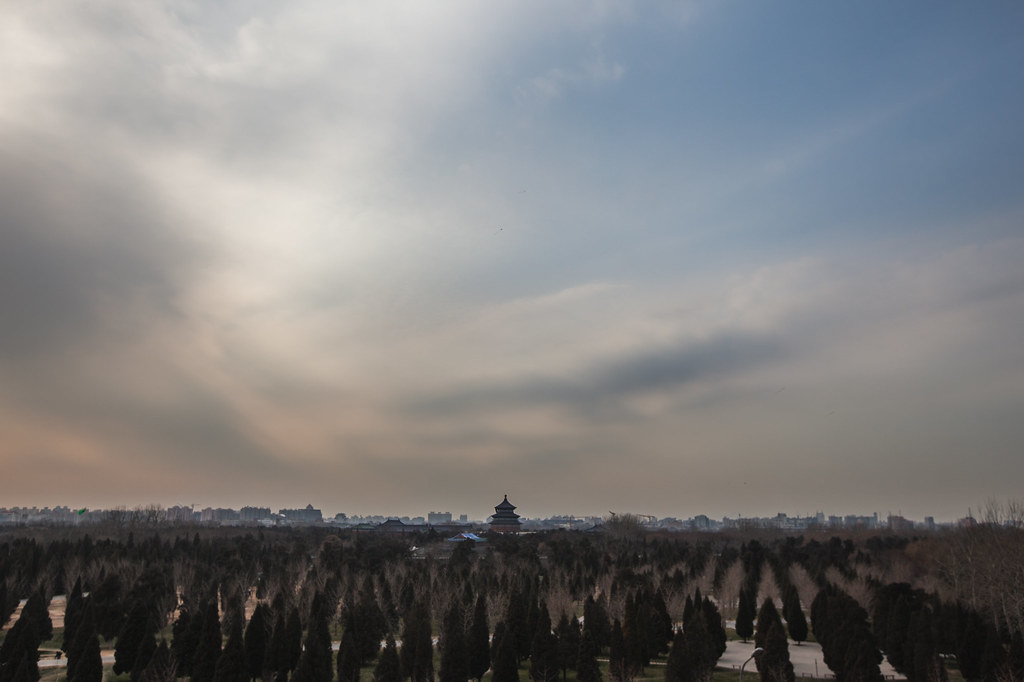
1/640s, f/6.3, ISO 200, 27mm
With the odd day or two of smoggy air, the last month have brought unusually clear skies to Beijing. The city is a different place when the air is clean. From smiley faces on the streets to chummy taxi drivers, you can feel the people of Beijing draw a collective sigh of relief. And no doubt most Beijingers enjoyed a moment of schadenfreude as Shanghai reached record breaking pollution levels a few weeks ago. Perhaps the liquid nitrogen is already working its magic.
On a beautiful day earlier this week, I stopped by the Hongqiao Pearl Market across from the Temple of Heaven. They have a balcony with great view of the park. Above is a shot from the late afternoon.
Beijing at Night

1/60s, f/1.2, ISO 3200, 50mm
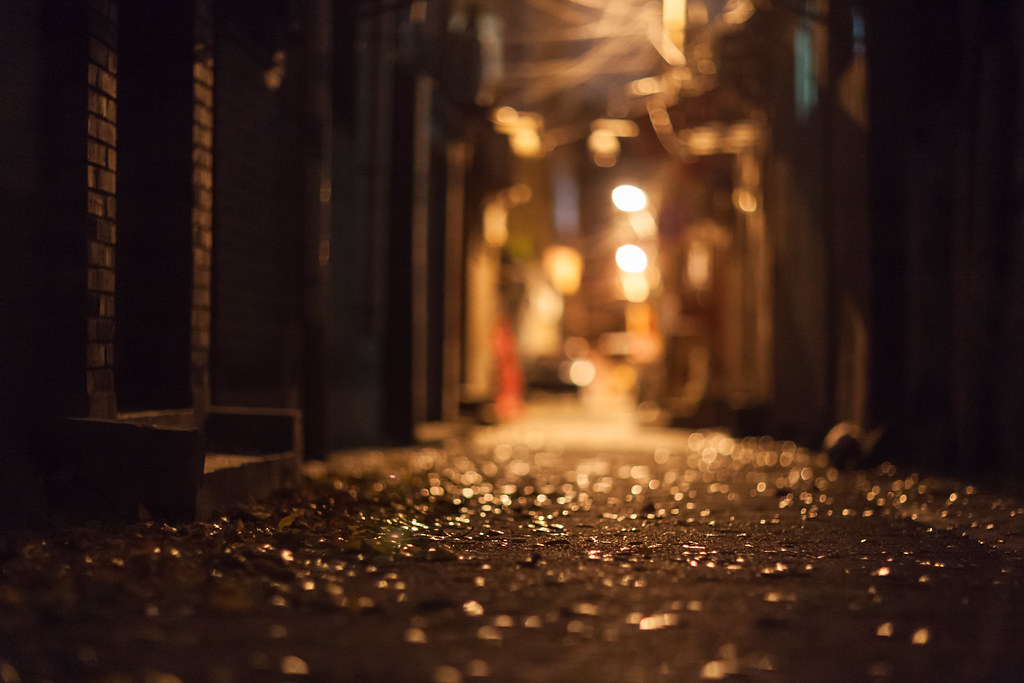
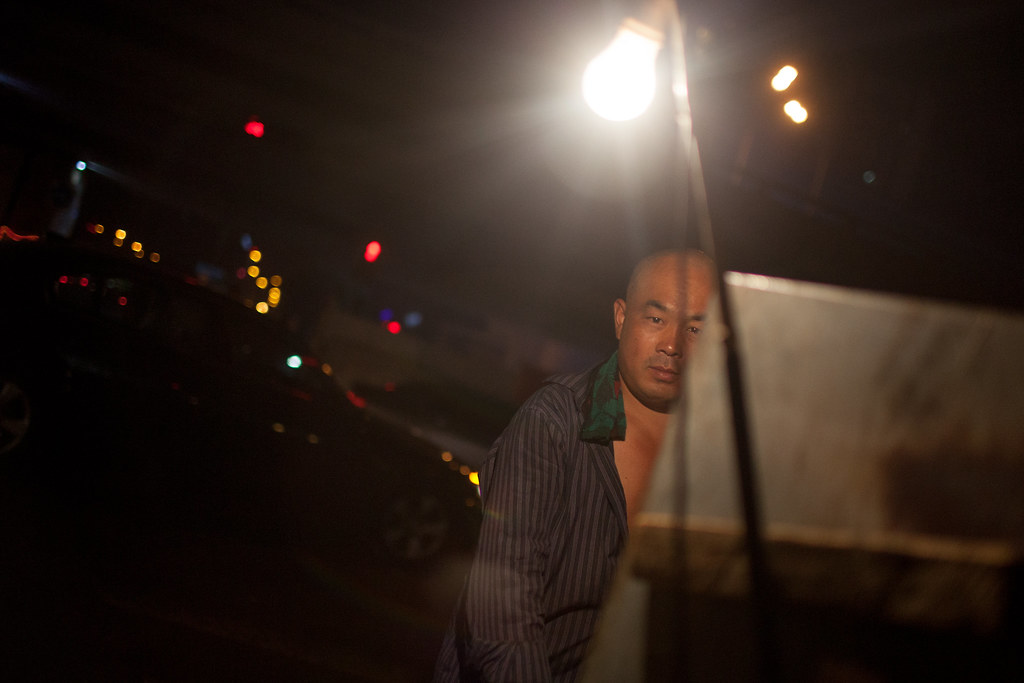
So I have been trying to settle on a new photography theme. Lately, I haven't had a chance to shoot much during the day, so I've ended up with a lot of evening shots. And most of them have been landscape shots of the citiscape variety. When I lived in New York and Hong Kong, I ended up doing a lot of late night street photography but in Beijing I've found this type of photography more challenging. This is mostly my own fault. Unlike New York and Hong Kong, I no longer have a bustling street at my doorstop. I have lived in Beijing neighborhoods without much street life, and to capture street scenes and portraits, I have had to make it a point to go somewhere and shoot. But I am trying to change that since Beijing has so many parts that are rich with street life, character, and contrasts.
In this post, I have compiled some of my street photography highlights from my time in Beijing. More to come soon...
1/800s, f/1.4, ISO 1600, 35mm
More shots below the fold.
Finally...
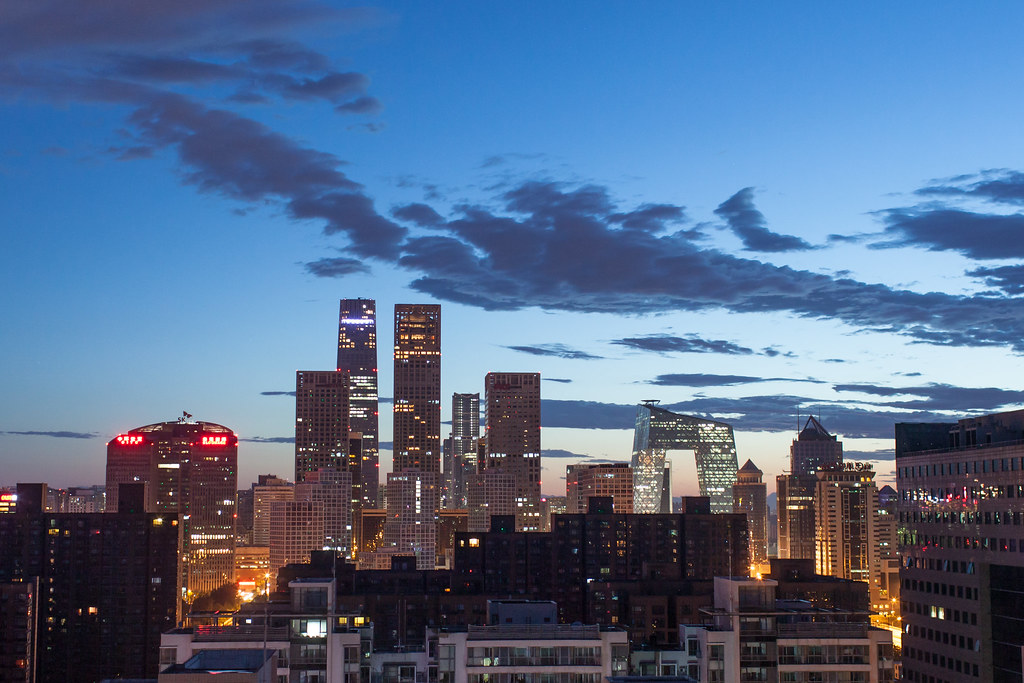
1s, f/4.0, ISO 800, 35mm (cropped)
What a relief! After a week with heavy smog, a rainstorm came through last night and washed away the polluted air. This morning it was all blue skies and the light in the early dawn was totally stunning. Beijing will seduce you like that. Just when you think you've had more than you could possibly take, she will come back with the most amazing weather.
Regular blogging will resume soon. I've been travelling over the last month and will be back with some shots form Denmark and France.
Behind Sanlitun (三里屯的后边)
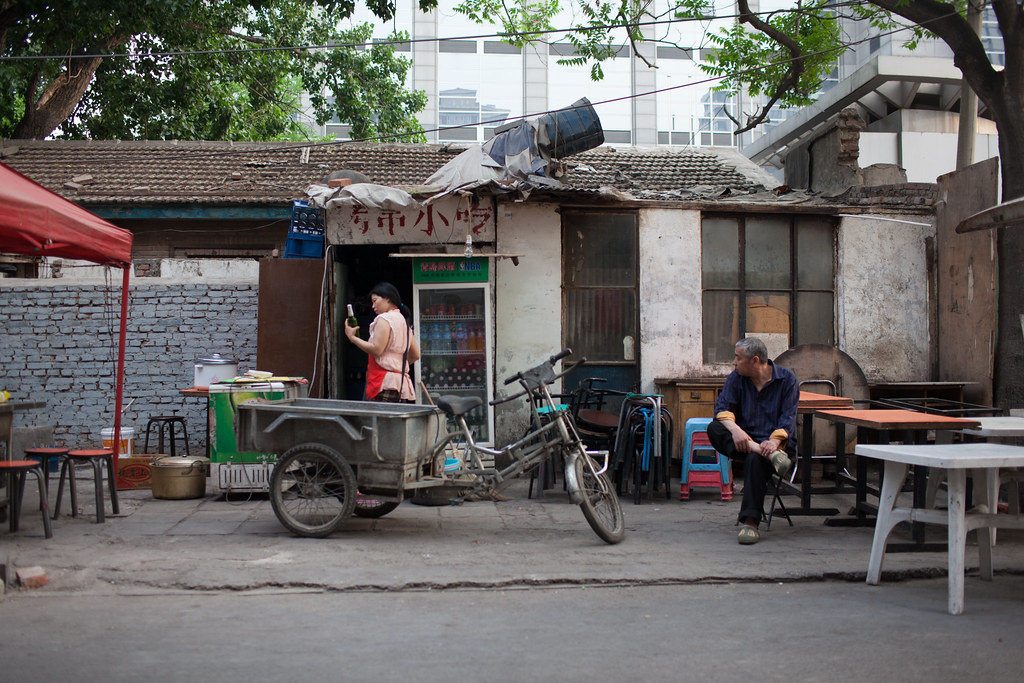
1/500, ƒ/2.2, ISO 400, 35mm
Sanlitun is an area in Beijing's Chaoyang District packed with high and low end shopping malls, restaurants and bars. In the 1950s, the new government moved most of the embassies here and built several apartment complexes reserved for foreign diplomats in and around the neighborhood (until the 1980s, these apartments were generally the only places where foreigners could legally live). As China opened up in the 1970s and 1980s, bars and restaurants catering to foreigners began to appear.
Like most of Beijing, Sanlitun has undergone a dramatic transformation. Until about a decade ago, most of the businesses catered to a younger, budget-minded audience, and cheap bars and hostels were surrounded by low-rise apartment buildings and hutong neighborhoods. Then the Olympics arrived and with that several high-end developments. Today, an upscale, open air shopping complex called the Village (recently renamed Taikoo Li in an effort of corporate branding) has become the center of Sanlitun complete with designer stores like Rolex and Versace and a trendy boutique hotel (where the nightly rates exceed the monthly salaries of people living just blocks away).
Despite the changes, traces of old Sanlitun remain. I recently took a walk with my camera around one of the hutongs behind Sanlitun Village. The contrast between the new and the old is mind-boggling, really--even if it's typical by now for most large Chinese cities.
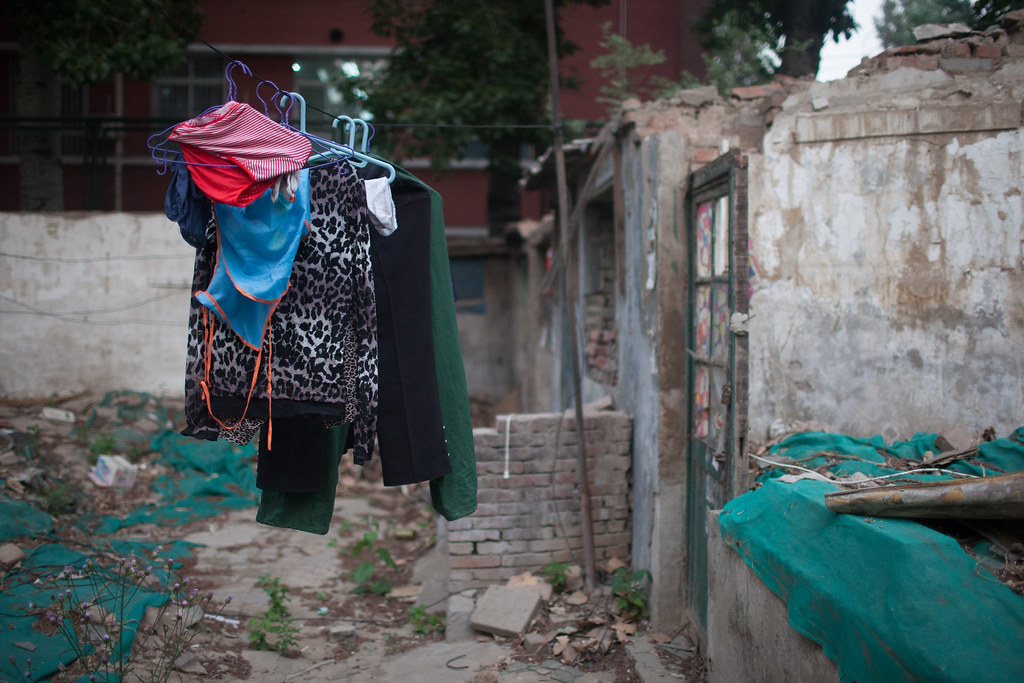
1/2000, ƒ/1.4, ISO 1600, 35mm
Read on below the fold for more shots.
With or Without
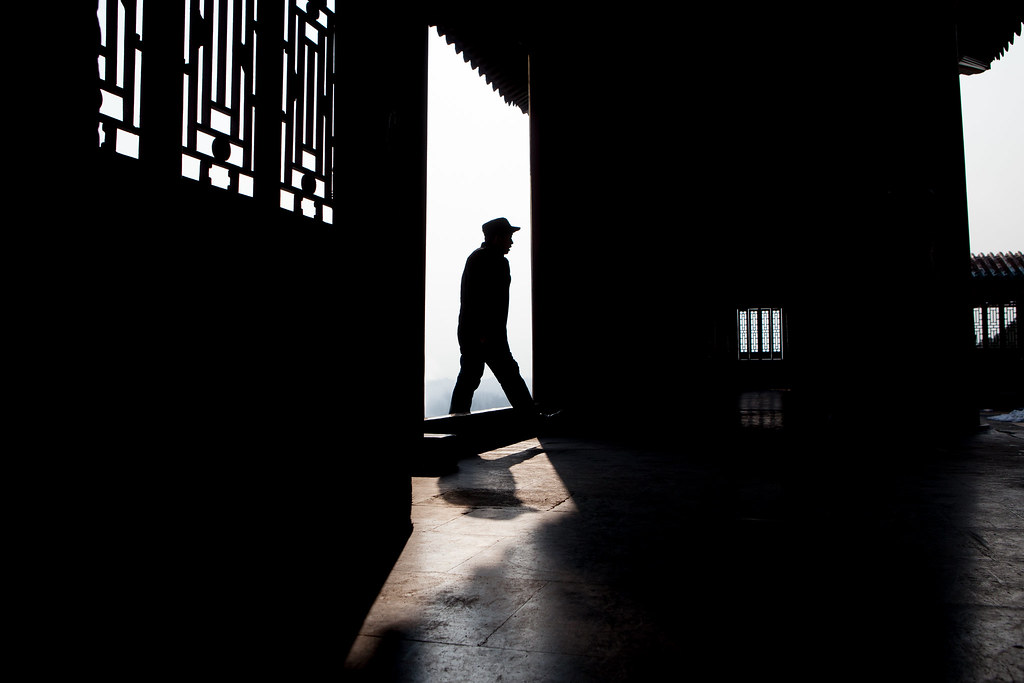
1/2000s, f/7.1, ISO 400, 28mm
I went for a quick walk at the Summer Palace in the late afternoon last week. The night before, an unseasonably late snowstorm had covered Beijing in a thick lawyer of snow. By the afternoon, most of the snow was gone and with blue skies over the city, the Summer Palace was not a bad place to be with a camera.
The light was a real treat. On the way up Longevity Hill (Wanshou Shan), I came across this hallway where where the late afternoon sun was creating some beautiful long shadows. With few people around I was able to capture the scene pretty well. Still, I wish I had taken a wider lens along, so I could have gotten some more windows inside the frame.
Pretty happy with the final result, I still can't decide if it works better with the silhouette of the man passing through the door (above) or the more deserted look with the view of the mountains in the distance (below the fold). I suppose, they are really two different compositions but ultimately I feel like the person adds more of a story to the picture. Thoughts?
Evening Photo Walk in Shanghai
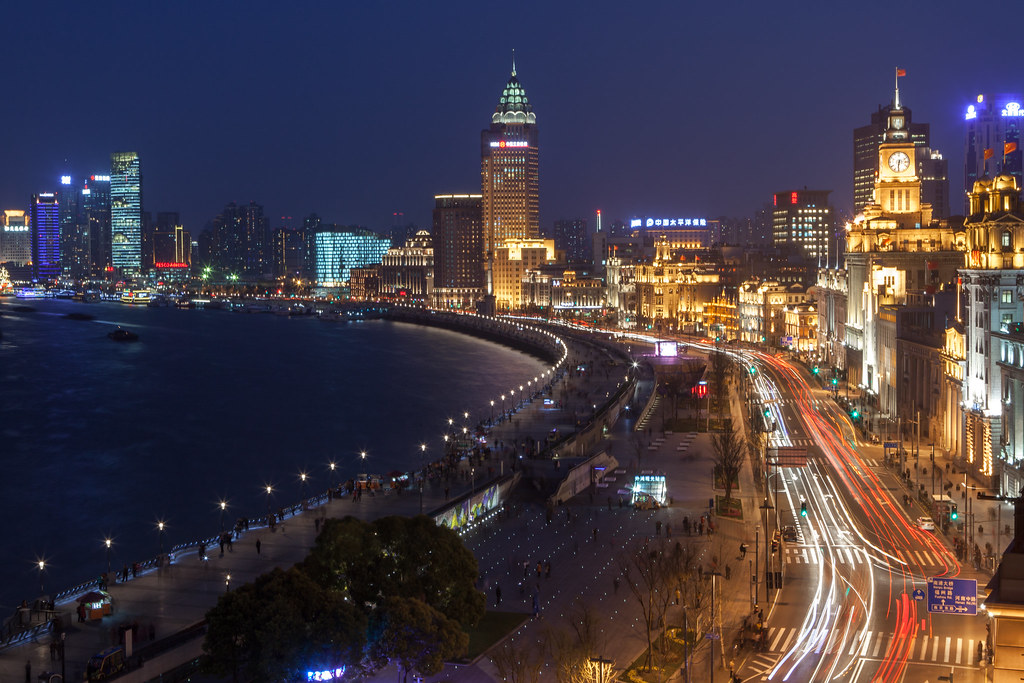
10s, f/18.0, ISO 200, 48mm
I went to Shanghai for a short trip last week. I only got to squeeze in a short walk with my camera but luckily the timing was good. I got in on the train from Beijing late in the afternoon and arrived to blue skies and warm spring temperatures. The late afternoon light was beautiful and after walking around the area by People's Square, I made my way down to see the sunset and watch the skyline lights turn on by the Bund.
It's hard not to be struck by Shanghai's immense contrasts. From the uber-modern, rapidly changing Pudong skyline and the neon signs on Nanjing Road to narrow lanes and night markets, the old and new exist seemingly effortlessly side by side. Read on to see some shots from around the Bund and People's Square.
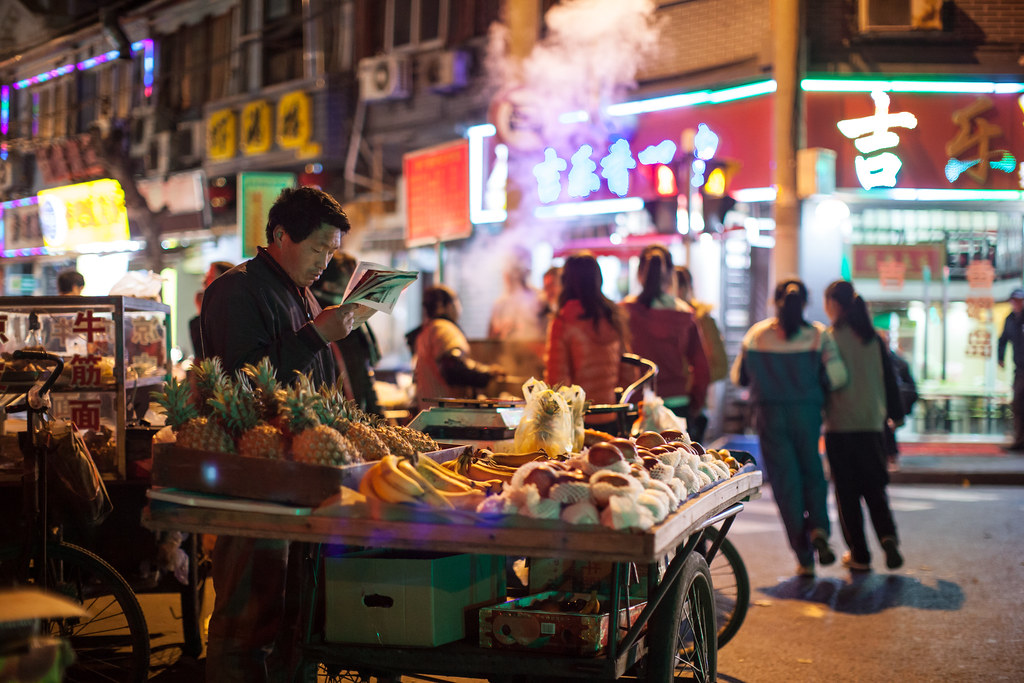
1/80s, f/1.4, ISO 1600, 50mm
Behind Qianmen (前门)
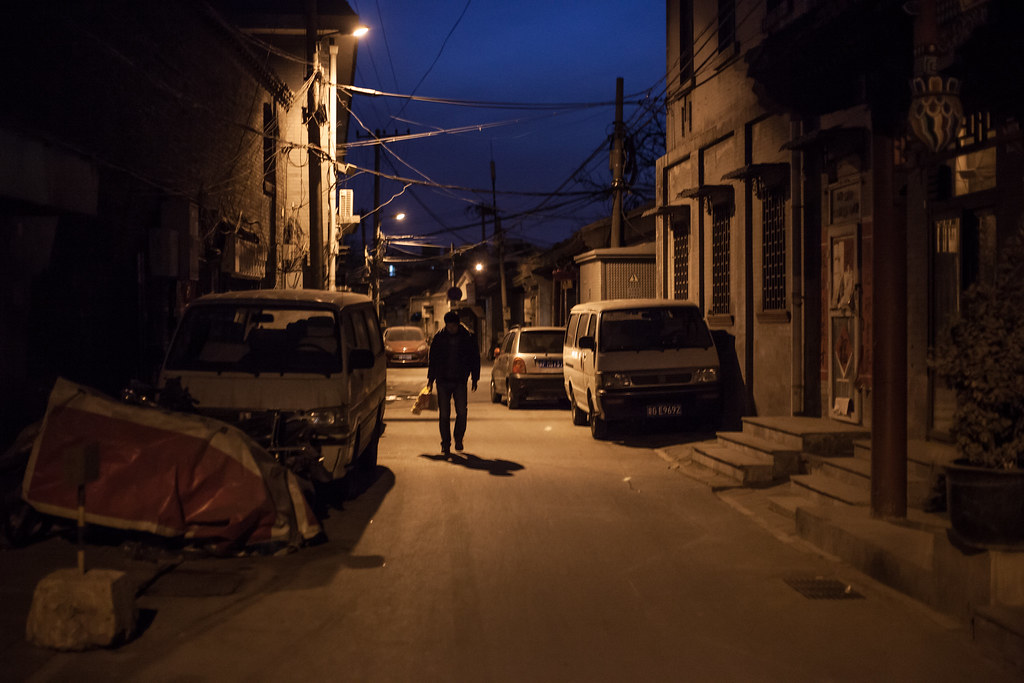
1/60s, f/1.8, ISO 3200, 50mm
Qianmen sits on the south end of Qiananmen Square. Also known by it's official name, Zhengyangmen, it was once part of the Beijing's city wall (Qianmen means front gate). Today, the city wall is long gone but the gate remains. It's one of the landmarks of the city and a popular tourist spot. Despite being in the middle of the Beijing, the neighborhood around Qianmen is home to several hutongs and traditional courtyard homes. Walking around the hutongs' narrow streets, it's hard to believe that you're just a few blocks away from the political and cultural center of Beijing (and, indeed, of China).
I spent some times getting lost in the neighborhood a few weeks ago. Continue below the fold for shots of Qianmen and Tiananmen.
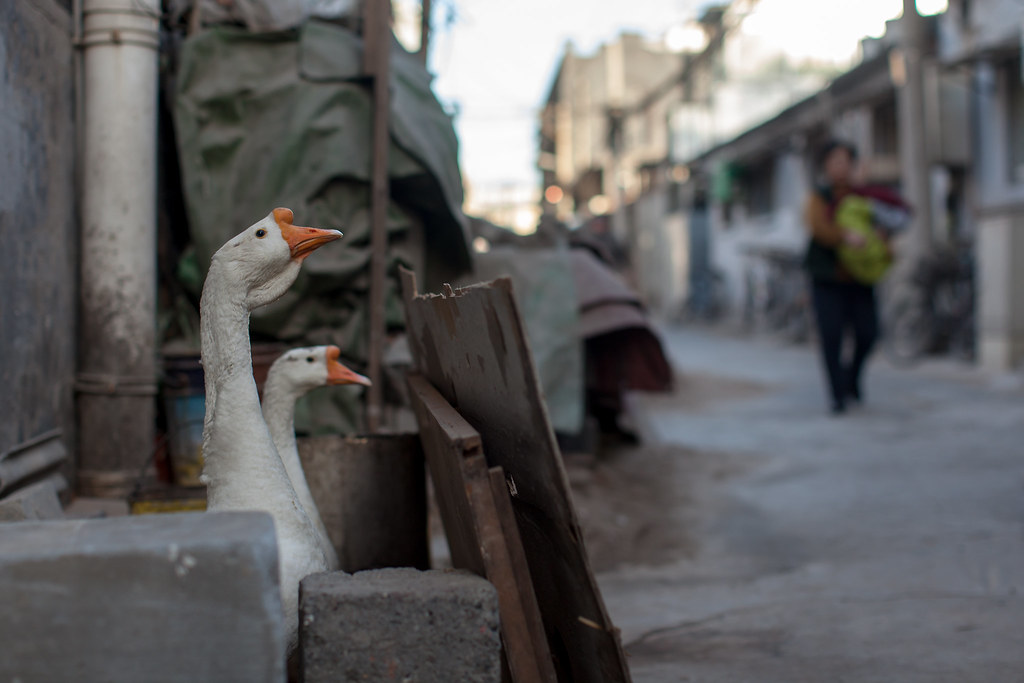
1/400s, f/2.2, ISO 200, 50mm
Around the CCTV Headquarters
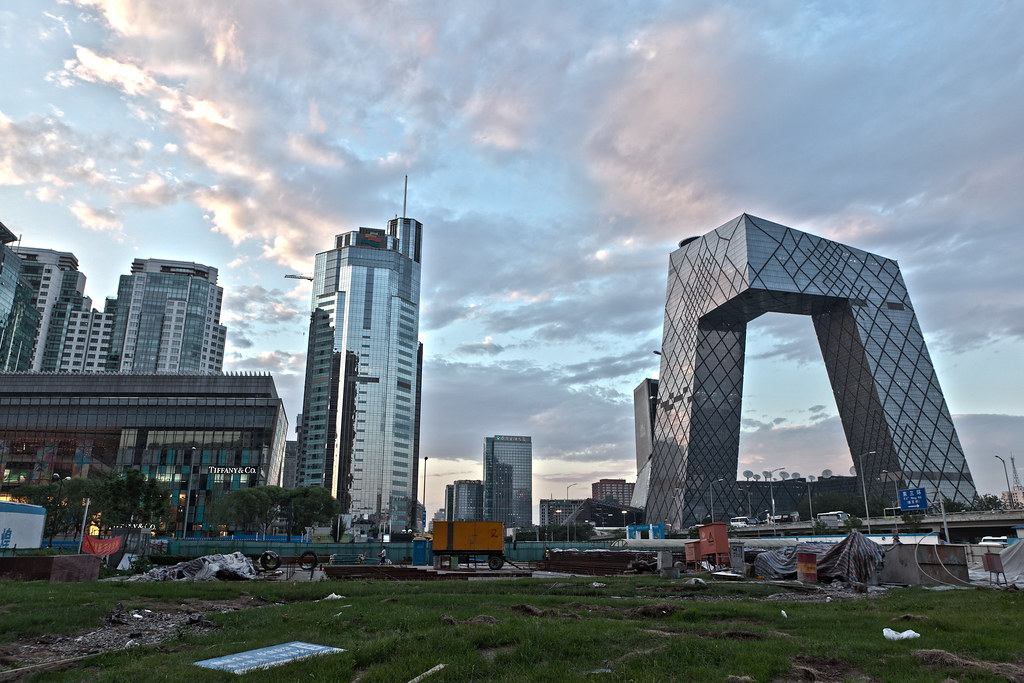
1/60s (bracketed HDR), f/7.1, ISO 800, 24mm
This week, when the smog loosened its grip on Beijing for a few days, I went to get some shots of the new CCTV Headquarters. The building was completed earlier this year and dominates the skyline of Beijing's Central Business District. The futuristic design features two leg-like towers leaning against each other, linked on top by a perpendicular extension. It occupies a giant block between the Guomao and Jintaixizhao subway stops, and inside there some sort of sloped plaza between the building's two legs.
The building is no doubt a bold and remarkable structure, though I'm not sure I like its bombastic presence. But at least it's not another bland, characterless skyscraper like those popping up around Beijing with predictable regularity. A disappointing feature of the building is its total lack of integration with nearby streets. The complex is set back far from the street and surrounding by a two-meter high fence (two of the adjacent streets are completely blacked off). Even if the inside is opened to the public some day, nothing seem to be designed to invite foot traffic, and access would be limited to one or two entrances.
Locals haven't been impressed, either, by the way, nicknaming it Big Boxer Shorts (大裤衩).
As for the shots, I used HDR processing on most of them. This allowed me to bring out more details in the sky and the shadows and at the same time give the shots a slightly more space-age feel to match the look of the building.
More shots below the fold.
Yellow Telephone
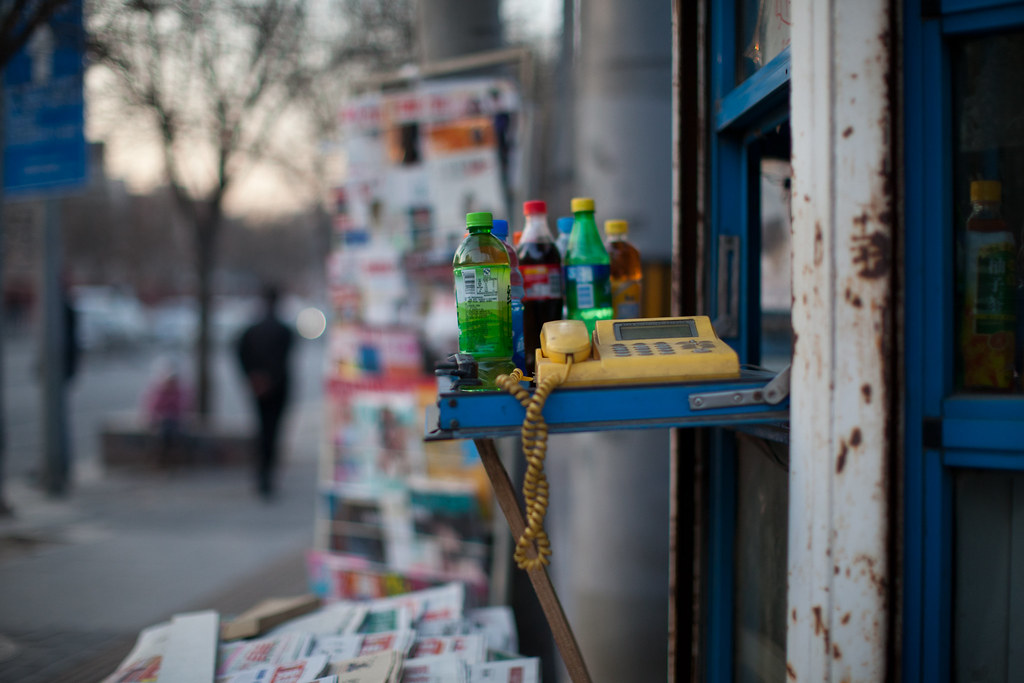
1/2500s, f/1.4, ISO 800, 50mm
What's attractive about a dirty, old telephone? Not much, generally. But somehow this yellow phone found just the right place in the world. At first, the phone and the yellow caps on the bottles caught my attention. Then I noticed, the matching blues of the newsstand and the sign in the background. I first shot the scene without any people any it, but the result struck me as a bit too desolate (and a bit dishonest given how busy the street was). So I waited around and got a father and his daughter to talk walk into the frame
Watch this Space
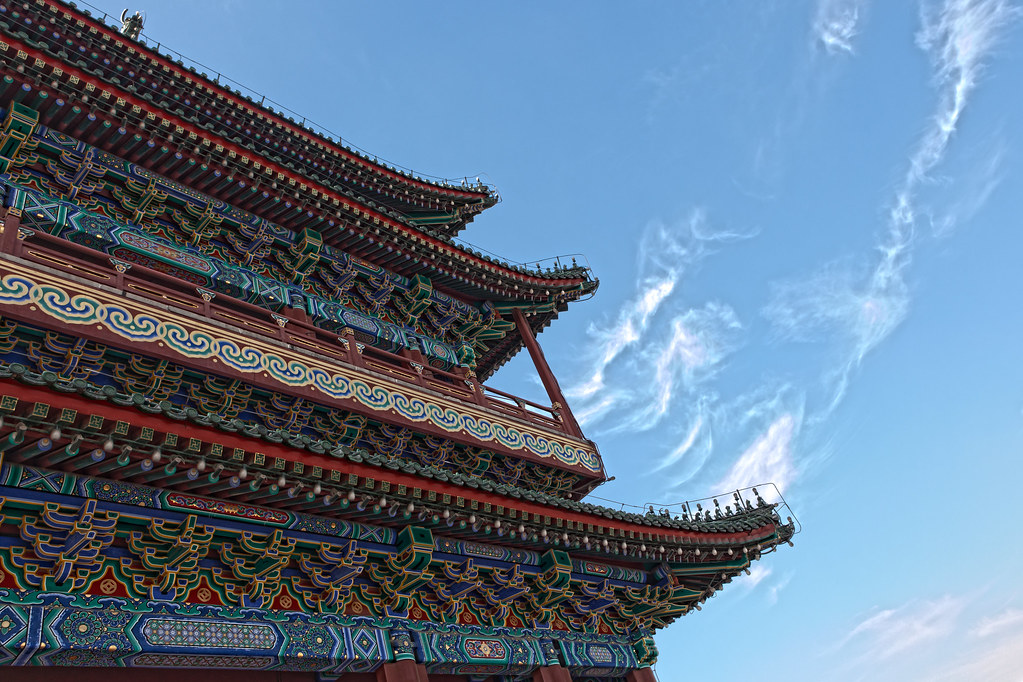
1/250s, f/6.3, ISO 400, 24mm
New photos and blog posts are coming soon. Here's a shot of Zhengyang Men from a few weeks ago. It's one of the gates in the old city wall that used to surround Beijing and sits at the south end of Tiananmen. And yes, that's a blue sky in Beijing. When the weather is nice, Beijing really charms.
On the Move
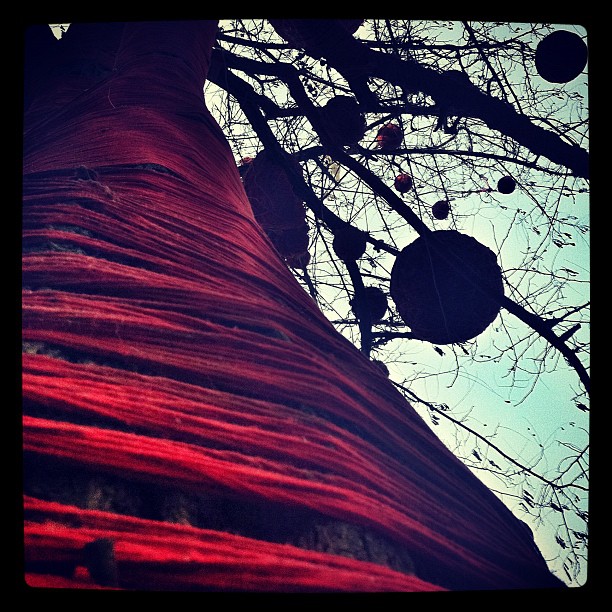
I've had to put my blogging on a brief hiatus. I moved to Beijing a few weeks ago and have yet to settle on a reliable VPN (blogger, which powers this site, is blocked in China). Until regular programing continues, you can keep up with my photography on my flickr stream. I've also begun using Instagram, so check out my stream there as well.
The instagram above is from an art installation at the 798 Art Zone in Beijing. It's a tree wrapped in red yarn and it's a pretty stunning site. Once spring comes around, I want to check how the tree looks with leaves on it.
Roots
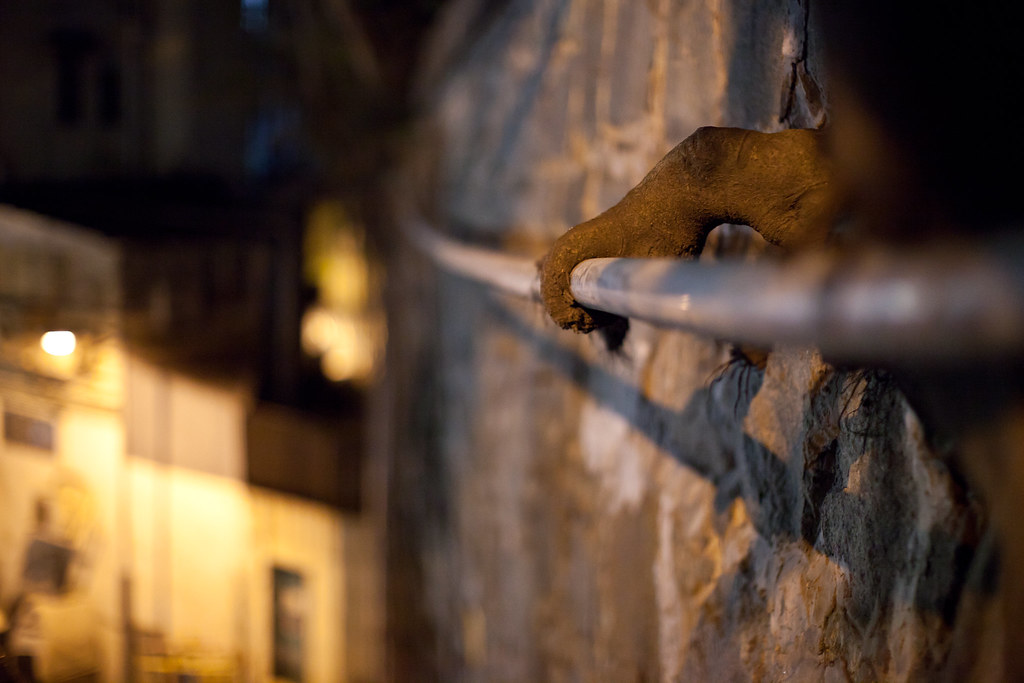
1/50s, f/1.2, ISO 3200, 50mm
Here's a night shot from the Soho neighborhood in Hong Kong. A few weeks ago, I noticed this tree growing out of a steep slope and became fascinated by how one of the roots had grabbed unto a a pipe running underneath its trunk. It was very dark, so I shot the photo at ISO 3200 with the lens wide open at f/1.2.
Sparks (火花)
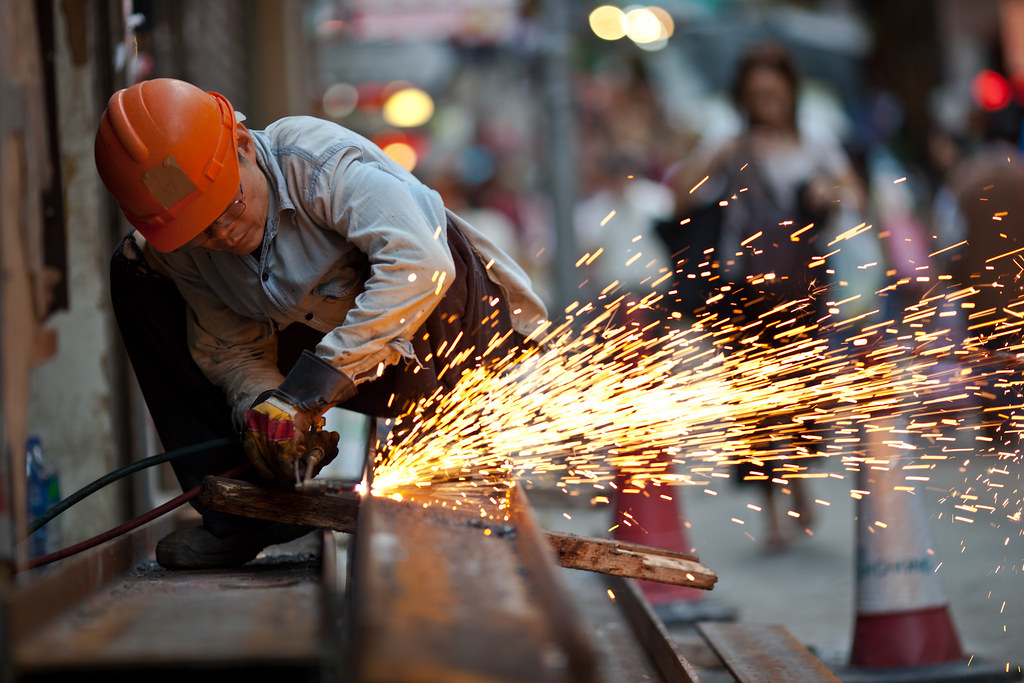
1/200s, f/2.0, ISO 200, 135 mm
Shooting with fast primes is a lot of fun. For this shot, I used Canon's 135mm f/2.0 lens with the lens wide open. The image quality is just superb and the auto-focus is fast and accurate. And it's great to have a medium telephoto lens that's fairly light-weight and inconspicuous for street photography. I used a fairly long shutter speed (1/200), so that the sparks would form light lines rather that just appear like tiny dots.
Around Hollywood Road (荷李活道)

4s, f/13.0, ISO 400, 14 mm
In Hong Kong, I live in the neighborhood of Soho, short for south of Hollywood Street. The neighborhood is on a dramatic hillside and is home to some truly great streets. It's also an area frequented by expats. There are lots of western restaurants and bars around and a number of fancy condo buildings and serviced apartments. But unlike other parts of Hong Kong, it's also an incredibly diverse neighborhood. Just down from Hollywood Road, there is a vibrant meats and vegetable market. Locals live, work, and shop here and walking these colorful streets is a nice contrast to the sterile, mega malls in Central (Hong Kong Island's downtown, of sorts). I like the that fact that the neighborhood gives me a chance to interact with some people I would rarely encounter if I lived in a true expat enclave--even if that interaction is pretty limited (I'm embarrassed to say that I'm still struggling with the handful of Cantonese phrases I've try to teach myself).
Having such a colorful neighborhood at my doorstep is, of course, a treat for a photographer. And there is no shortage of great street scenes to photograph. Many of the vendors are not keen to be photographed, and I generally respect that or ask before I shoot if someone seems uncomfortable. On the other hand, street photography is about capturing the life on the street as it happens rather than a staged version of it. So unless someone affirmatively makes clear they don't want to get photographed, I simply take my presence and raised camera as sufficient notice.
Included in this post are some recent shots from around Hollywood Road. They are taken with a number of different lenses, including the Canon 14mm f/2.8 L lens. I few weeks ago, I rented this super wide angle lens, which provides more than 110 degree field of view. The extreme wide-angle made for a bit of a learning curve but once I got the hang of it, it was a very useful lens for pulling in a lot of street life.
Continue below the fold for more shots.
Subscribe to:
Posts (Atom)
